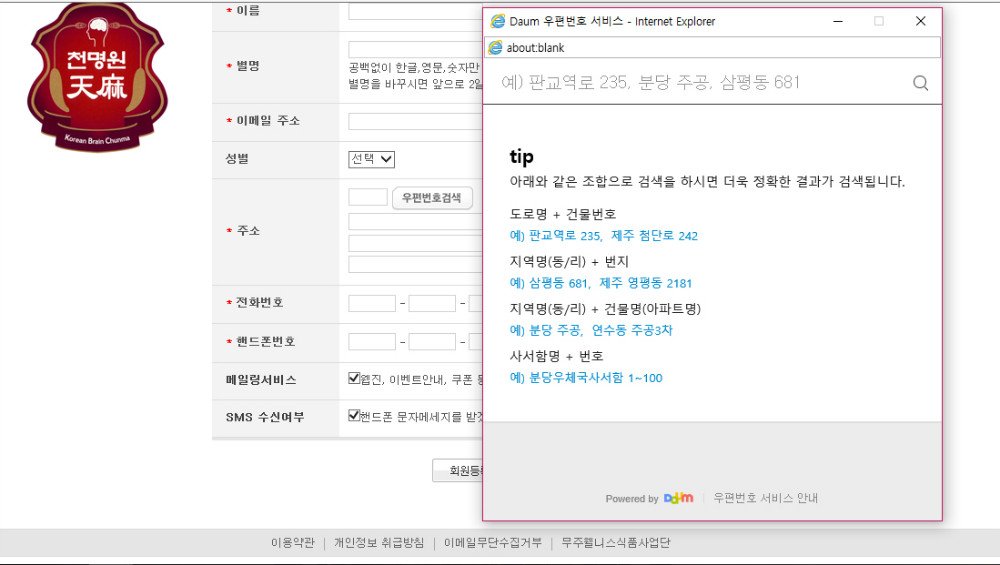
You've got a letter to send, an online form to fill out, or a package eagerly awaiting its journey. Then you hit it: the dreaded "우편번호 찾기 및 조회" field, demanding a postal code. For something so seemingly simple, finding the right five digits can sometimes feel like a treasure hunt, especially if you're navigating Korea's unique addressing system. But what if it didn't have to be? What if you could reliably search for any Korean postal code by just a road name, a lot number, or even just the building's name?
This guide cuts through the confusion, offering a comprehensive, yet refreshingly straightforward, walkthrough on how to accurately locate and inquire about any postal code in Korea. We'll show you exactly how professionals and locals do it, ensuring your mail gets where it needs to go, every single time.
At a Glance: Key Takeaways for Postal Code Search
- Five-Digit System: All current Korean postal codes consist of five digits.
- Multiple Search Options: You can find postal codes using a road name, a lot number (구 지번 주소), or even just a building name.
- Primary Official Source: Government-backed online tools are your most reliable bet.
- Automated Copying: Many search tools offer a convenient one-click copy function for the postal code.
- Accuracy is Key: A correct postal code ensures efficient delivery and seamless form submission.
Why Those Five Digits Matter More Than You Think
In an increasingly digital world, you might wonder if physical addresses and their accompanying postal codes are still relevant. The short answer: absolutely. For anyone living, working, or doing business in Korea, mastering the art of "우편번호 찾기 및 조회" isn't just a minor convenience; it's a fundamental skill.
Think about it:
- Reliable Mail Delivery: The most obvious reason. A correct postal code ensures your letters, parcels, and important documents reach their intended recipient without delay or misdirection.
- Online Shopping & E-commerce: From domestic retailers to international shipments, almost every online transaction requires an accurate postal code for delivery.
- Official Documents & Forms: Applying for a visa, registering your residency, opening a bank account, or navigating various government services—all these often require a precise address, including the postal code.
- GPS & Navigation: While modern GPS systems are powerful, having the correct postal code can often fine-tune location data, especially in new developments or complex urban areas.
- Business Operations: For businesses, correct postal codes are crucial for logistics, customer databases, and targeted marketing efforts.
Understanding and correctly using postal codes is a cornerstone of daily life and administrative tasks in Korea. It's an essential part of Your guide to zip codes in any country, but particularly relevant here with its evolving addressing system.
A Brief History: From Six to Five Digits
Korea’s postal code system has seen its own evolution. For many years, the standard was a six-digit code. However, in 2015, the system transitioned to a new, more efficient five-digit format. This change wasn't just arbitrary; it was part of a larger overhaul aimed at streamlining the postal service and making it compatible with the new road name address system (도로명 주소), which itself replaced the older lot number system (지번 주소) as the primary official address.
This move dramatically improved the specificity of addresses, allowing for more precise sorting and delivery, especially in densely populated areas. It also brought Korea in line with international standards, making it easier for global services like shipping goods internationally to integrate with the Korean system.
Your Go-To Method: Searching by Road Name, Lot Number, or Building Name
The beauty of modern Korean postal code search tools is their flexibility. You don't have to memorize a specific address format. Whether you have a new road name address, an older lot number address, or simply the name of a well-known building, you can likely find the postal code you need.
The fundamental principle, as highlighted by resources like juso24.com, is to provide any piece of accurate address information you have.
How to Search: A Step-by-Step Guide
Let's walk through the process using a typical online postal code search portal (like the one mentioned in our research, juso24.com, or official government portals).
- Access a Reliable Search Tool: Open your web browser and navigate to a reputable Korean postal code search service. Official government sites (e.g., Korea Post, administrative services portals) or well-established private services are best.
- Locate the Search Bar: You'll typically find a prominent search bar labeled "우편번호 검색" (Postal Code Search) or similar.
- Input Your Address Information: This is where your options come in handy.
- Option 1: Searching by Road Name Address (도로명 주소)
- This is the preferred and most accurate method now. You'll enter the road name, followed by the building number.
- Example: "Sejong-daero 163" or "Seoul, Gangnam-gu, Teheran-ro 117"
- You can start with just the road name and number, or include the city/district for more specific results. The system is designed to handle partial inputs, so "Teheran-ro 117" might be enough if it's unique enough within Seoul.
- Tip: If you're unsure of the exact road name, try variations or just the main part of the name.
- Option 2: Searching by Lot Number Address (지번 주소)
- While road name addresses are primary, many older documents or properties might still refer to lot numbers. Thankfully, these are still fully searchable.
- Example: "Yongsan-gu, Dongja-dong 12" or "Seoul, Gangbuk-gu, Beon-dong 446-8"
- Enter the administrative district (e.g., Gangbuk-gu, Beon-dong) followed by the lot number. Hyphens are common for sub-lot numbers (e.g., 446-8).
- Note: The system internally maps lot numbers to their corresponding road name addresses and then retrieves the 5-digit postal code. This flexibility is a testament to the robust design of understanding the Korean addressing system.
- Option 3: Searching by Building Name (건물명)
- This is incredibly convenient for well-known commercial buildings, government offices, or large residential complexes.
- Example: "Mirae Asset Tower," "KB Insurance Building," "Samsung Fire & Marine Insurance Seocho Office," "Korea Investment & Securities Building"
- Just type in the full, accurate name of the building. The system will typically return results that match the building name, including its primary address and postal code.
- Tip: Be precise with building names. Slight misspellings or abbreviations might yield no results.
- Initiate the Search: Click the "검색" (Search) button or press Enter.
- Review Search Results:
- The system will display a list of matching addresses. Pay close attention to the full address to ensure it matches your intended location.
- For each result, you'll see the full address (often both road name and lot number) and the 5-digit postal code.
- Click to Copy: As per our ground truth, many portals offer a "click to copy" feature. Simply click on the postal code itself, and it will be automatically copied to your clipboard, ready to paste into your form or document.
What if Your Search Yields No Results or Too Many?
- Refine Your Keywords: If no results appear, try simplifying your input. Instead of "Seoul, Gangnam-gu, Teheran-ro 117," try just "Teheran-ro 117." Or if searching by building name, ensure correct spelling.
- Add More Detail (or Less): If you get too many results, adding more specific information (like the dong or gu when searching a road name) can help narrow it down. Conversely, if you're too specific and getting no hits, try a broader term.
- Check for Typos: Even a single misplaced character can throw off the search. Double-check your input carefully.
- Verify Address Information: If you're relying on an old address, it might be outdated. Cross-reference with another source if possible.
- Use the Dong Name (동 이름): Sometimes, knowing the dong (administrative neighborhood) can be a good starting point, especially for residential areas without widely known building names. You can search by dong name and then browse the listed roads/lot numbers within that dong.
Common Scenarios Where You'll Need a Postal Code
Understanding when you'll need this information can save you last-minute scrambles. Here are some frequent situations:
- Sending Mail or Packages: Whether it's a birthday card, a utility bill, or a parcel, the postal code is essential for all domestic and shipping goods internationally.
- Online Registrations: Signing up for a new service, creating an account on a local website, or applying for online memberships often requires your residential address, including the postal code.
- Applying for official documents: From driver's licenses to business permits, nearly all official government forms mandate a complete and accurate address. This is critical for navigating various government services.
- Changing your address: When you move, updating your address with banks, service providers, and government agencies will require your new postal code. This is a crucial step for anyone planning your move to Korea.
- Utilities and Services Setup: Setting up electricity, gas, internet, or phone services at a new residence will always ask for the postal code.
- Receiving Deliveries: While many food delivery apps rely on GPS, for larger deliveries or specialized services, providing the postal code upfront ensures smooth logistics.
Being prepared with this knowledge will make your interactions with these systems much smoother.
Troubleshooting and Advanced Tips
Even with the best tools, you might encounter specific challenges. Here’s how to handle them:
- New Construction or Unregistered Addresses: For very new buildings, especially in developing areas, the postal code might not immediately appear in standard databases. In such cases, contact the building management office or the local district office (구청) directly. They will have the most up-to-date information.
- Mixed-Use Buildings: Some large buildings might have different postal codes for residential units versus commercial offices, or even different wings. Always specify if you're looking for a residential (아파트) or commercial (오피스) postal code if the search results are ambiguous.
- Abbreviations and Partial Names: While the system is smart, using full, official names for roads, districts, and buildings generally yields better results. Avoid abbreviations unless you are certain they are widely recognized.
- Mobile vs. Desktop Search: Most postal code search services are optimized for both mobile and desktop. Choose the platform that's most convenient for you. The functionality remains largely the same.
- Cross-Referencing: If you find a postal code and want to be absolutely sure, try cross-referencing it with another reliable source or by checking an official document related to that address.
Frequently Asked Questions About Korean Postal Codes
Here are some quick answers to common questions, designed to give you instant clarity.
Q: Are Korean postal codes always 5 digits now?
A: Yes, all official Korean postal codes transitioned to a 5-digit format in 2015. Any older 6-digit codes are no longer valid for most purposes.
Q: Can I still use the old lot number (지번) addresses to find a postal code?
A: Absolutely. While road name addresses (도로명 주소) are the primary standard, official postal code search tools still allow you to search using lot number addresses. The system will convert it internally to find the correct 5-digit code.
Q: What if I only know the building name, but not the specific road name or lot number?
A: Many official search portals (like juso24.com) allow you to search directly by the building's name, especially for well-known commercial or residential complexes.
Q: Does the postal code change if I move to a different floor in the same building?
A: Generally, no. The postal code is assigned to the building or a specific section of a street. Changes in floor or unit number within the same building usually do not affect the postal code, but rather the detailed address line.
Q: Is there an official app for finding postal codes?
A: While there isn't one single "official" app from Korea Post, many mapping and navigation apps, as well as some government service apps, integrate postal code search functionality. You can also simply use a web-based search portal on your mobile browser.
Q: How accurate are online postal code search tools?
A: Highly accurate. Government-backed services and reputable private tools draw directly from official databases, ensuring the information is current and reliable. Always use official sources for critical applications.
Q: What should I do if a foreign website or form only accepts 6-digit postal codes for Korea?
A: This indicates an outdated system on the foreign website's part. You should still provide your correct 5-digit Korean postal code. If the form technically won't allow it, try adding a "0" at the end (e.g., 12345 becomes 123450), but clarify this with the recipient if possible. Ideally, the website should update its system.
Making Every Delivery and Document Count
Searching for a postal code doesn't have to be a source of frustration. With Korea's efficient, multi-faceted search systems, finding the correct 5-digit code is often just a few clicks away. By understanding your options—whether you're armed with a road name, a lot number, or just a building name—you empower yourself to navigate everything from online shopping to official paperwork with confidence.
So, the next time that "우편번호 찾기 및 조회" prompt appears, you'll know exactly what to do. You're not just finding a number; you're ensuring precision, efficiency, and peace of mind in every interaction.